What Defines the Aruba Nightlife Experience?
Aruba nightlife ranks among the Caribbean’s top 3 entertainment destinations, offering 100+ venues across three distinct districts. The scene operates on a predictable schedule: happy hour 5:00-7:00 PM (20-40% drink discounts), prime time 9:00-11:00 PM (peak crowds), and late night 12:00 AM+ (clubs stay open until 3:00-4:00 AM). This structure combines island vacation relaxation with urban entertainment sophistication.
Key elements that define the night scene include:
- happy hour culture: 80% of venues offer specials between 5:00 PM and 7:00 PM, serving as a transition from day to night,
- diverse music genres: you can expect to hear a mix of live Caribbean bands, reggae, salsa, and international DJ sets across 50+ music venues,
- safety and accessibility: the nightlife areas are distinct and generally considered safe for tourists to navigate, with crime rates 60% lower than Caribbean average.
Where Are the Best Entertainment Districts Located?
The island concentrates 90% of evening entertainment in three geographic zones within a 15-mile radius. Palm Beach hosts 40+ venues in a 2-mile walkable strip, Oranjestad offers 25+ harbor-view locations, and San Nicolas provides 15+ authentic local spots. Each district operates on different peak hours and attracts distinct crowds.
Palm Beach High-Rise Strip
Palm Beach contains 40+ venues in a 2-mile walkable corridor along J.E. Irausquin Boulevard. This district generates 60% of the island’s nightlife revenue and operates at peak capacity 9:00 PM-2:00 AM Thursday-Saturday. The High-Rise Strip features the highest concentration of casinos (12 gaming floors) and dance clubs (8 major venues) on the island.
Visitors to Palm Beach can expect:
- walkability: 15-minute maximum walk between any two venues without transportation,
- high energy: 2,000-3,000 nightly visitors during peak season (December-April),
- variety: a mix of rooftop bars (5 venues), dance clubs (8 venues), and casual lounges (20+ venues) all in one strip.
Oranjestad Downtown and Harbor Area
Oranjestad operates 25+ venues within a 1-mile radius of the cruise terminal and Renaissance Marketplace. This district attracts 40% local residents versus 90% tourists in Palm Beach, creating a 50/50 visitor-local mix. Peak hours run 7:00-11:00 PM, earlier than Palm Beach’s midnight peak.
Oranjestad nightlife features:
- harbor views: 15 venues overlook the water, providing scenic backdrops from elevated terraces,
- cultural mix: 40% local attendance versus 10% in Palm Beach, distinct from the purely tourist-focused High-Rise area,
- dining and entertainment: 20 venues combine late-night dining (kitchens open until 11:00 PM) with evening entertainment.
San Nicolas and the Local Cultural Scene
San Nicolas operates 15+ venues concentrated in a 0.5-mile radius around Main Street. This district attracts 70% local residents and 30% adventurous tourists seeking authentic experiences. The area hosts 12 annual cultural festivals and maintains the island’s largest concentration of street art (80+ murals).
Highlights of San Nicolas include:
- art and culture: the district features 80+ street art murals and hosts 12 annual cultural festivals,
- authentic atmosphere: venues reflect the true local music scene with 90% Papiamento-speaking staff and community-focused events,
- carnival spirit: this area hosts 8 of the island’s 15 major carnival events, including the Grand Parade route.
What Types of Nightlife Venues Can You Visit?
Aruba operates 100+ licensed nightlife venues across 5 distinct categories. Beach bars (30 venues) dominate the casual segment, nightclubs (8 major venues) control the dance scene, casinos (12 gaming floors) operate nearly 24/7, live music venues (20+ stages) host 300+ annual performances, and cocktail lounges (40+ locations) serve the upscale market.
Beach Bars and Tropical Cocktail Lounges
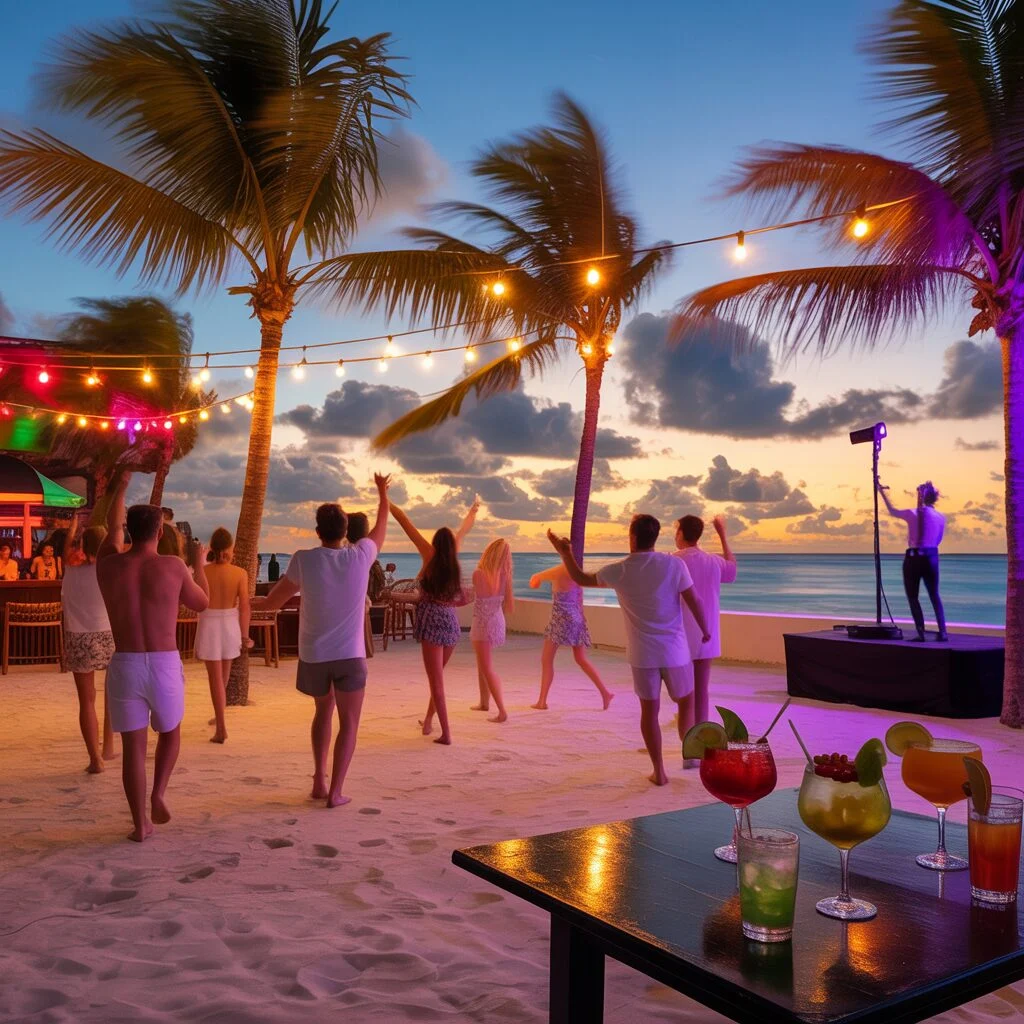
30 beach bars operate along the western coastline from Eagle Beach to Malmok. These venues serve 500-1,000 sunset viewers nightly during peak season, with happy hour generating 40% of daily revenue. Signature drinks range from $8-15, with local Balashi beer at $4-6.
Characteristics of these venues include:
- ocean views: direct beach access at 25 of 30 locations with unobstructed sunset vistas from 6:30-7:15 PM year-round,
- casual vibe: zero dress code enforcement and 100% open-air seating at 90% of venues,
- tropical drinks: menus feature 15-25 rum-based cocktails, with local rum punch at $10-12 and frozen drinks at $12-15.
Nightclubs and Late-Night Dance Venues
8 major nightclubs operate in Palm Beach and Oranjestad, with combined capacity of 3,000+ guests. Venues open at 10:00 PM but reach peak capacity 12:00-2:00 AM Thursday-Saturday. Cover charges range from $10-30, with VIP tables starting at $200 minimum spend.
What to expect at dance venues:
- DJ sets: international DJs perform 2-3 times monthly, with local talent filling 80% of weekly slots playing EDM, Latin, and Top 40,
- dance floors: 2,000-5,000 square foot dedicated spaces with LED lighting systems and 20,000+ watt sound,
- VIP options: 6 of 8 major clubs offer bottle service ($150-500 minimum) and reserved seating (10-20 tables per venue).
Casinos and Gaming Entertainment Centers
12 casino floors operate across the island with 1,500+ slot machines and 150+ table games. The largest venues (Stellaris, Crystal, Alhambra) operate 18-24 hours daily. Minimum bets start at $5 for table games and $0.01 for slots, with high-limit rooms requiring $25-100 minimums.
Casino nightlife features:
- table games: 150+ tables across all venues offering blackjack ($5-25 minimums), roulette ($5-10), poker ($1-2 to $5-10), and craps ($5-10),
- slot machines: 1,500+ machines ranging from $0.01 penny slots to $5-25 high-stakes games with progressive jackpots reaching $100,000+,
- late hours: 8 of 12 casinos operate 18+ hours daily, with 3 major venues (Stellaris, Crystal, Alhambra) running 24/7 operations.
Live Music Venues and Piano Bars
20+ venues host live performances 3-7 nights weekly, totaling 300+ annual shows. Caribbean bands perform at 12 venues, Latin music dominates 8 locations, and acoustic sets fill 15+ lounges. Performance times typically run 8:00-11:00 PM, with some venues extending to midnight on weekends.
Musical offerings include:
- Caribbean bands: 12 venues host live Soca, Calypso, and Reggae performances 3-5 nights weekly, with 4-8 piece bands,
- Latin rhythms: 8 venues dedicated to salsa and Latin dancing with live bands Thursday-Saturday and DJ sets Sunday-Wednesday,
- acoustic sets: 15+ lounges feature solo performers 5-7 nights weekly providing background music from 7:00-10:00 PM.
What Unique Nightlife Activities Does Aruba Offer?
Beyond static venues, 15+ tour operators offer dynamic nightlife experiences serving 10,000+ annual participants. Party buses run 5-7 nights weekly visiting 4-6 venues per tour, sunset cruises operate daily with 50-150 passenger capacity, and weekly cultural festivals attract 500-2,000 attendees depending on season.
Party Buses and Bar-Hopping Tours
5 operators run party bus tours 5-7 nights weekly, visiting 4-6 venues over 4-5 hours. Tours cost $50-85 per person including transportation, 2-3 drinks, and cover charges. Buses accommodate 20-40 passengers and depart 8:00-9:00 PM from major hotel pickup points.
Benefits of these tours:
- transportation included: air-conditioned buses with onboard bars eliminate taxi costs ($15-30 per trip) and driving concerns,
- social atmosphere: groups of 20-40 participants designed for mixing, with 60% solo travelers and 40% couples/small groups,
- curated stops: guides select 4-6 venues across 2-3 districts, including 1-2 local spots not typically visited by tourists.
Sunset Cruises and Nighttime Beach Parties
10+ operators run daily sunset cruises departing 5:00-6:00 PM for 2-3 hour excursions. Catamarans accommodate 50-150 passengers with open bars, appetizers, and music. Prices range from $50-95 per person, with premium options ($120-150) including dinner and beach landings.
Experience highlights:
- scenic views: 2-3 hour cruises along the western coastline capturing sunset from 6:30-7:15 PM year-round from catamaran decks,
- onboard entertainment: open bars (2-3 hour duration), appetizer service, and DJ or live music on 80% of cruises,
- beach landings: 30% of cruises conclude with 30-60 minute beach parties on secluded shores with bonfire setups.
Weekly Cultural Festivals and Local Events
12+ recurring weekly events operate year-round, with the Bon Bini Festival (every Tuesday, 500-800 attendees) and Carubbian Festival (every Thursday, 300-500 attendees) as anchors. Events run 6:30-9:30 PM featuring 10-15 food vendors, 5-8 artisan booths, and 2-3 live performances.
Common event types:
- weekly festivals: Bon Bini Festival (Tuesdays, 6:30-8:30 PM, Fort Zoutman) and Carubbian Festival (Thursdays, 6:00-9:00 PM, San Nicolas) attract 300-800 attendees weekly,
- themed parties: 40+ hotels and bars host specific theme nights (Latin Night, Karaoke, Ladies Night) 2-3 times weekly with 50-200 participants,
- carnival events: 15 major events during January-March season including 8 parades, 5 jump-ups, and 2 grand celebrations attracting 5,000-20,000 participants.
How to Plan Your Night Out in Aruba
Successful nightlife planning requires understanding 5 key logistics: safety protocols (crime rate 60% below Caribbean average), dress codes (vary by venue type), legal drinking age (18 years), transportation options (taxis, buses, walking), and budget allocation ($50-200 per person per night depending on venue selection).
Is Aruba Nightlife Safe for Tourists?
Aruba maintains a violent crime rate 60% below the Caribbean average, with tourist-focused districts (Palm Beach, Oranjestad) experiencing 90% of incidents as petty theft. Police maintain visible presence in nightlife zones 8:00 PM-4:00 AM, with response times under 10 minutes in main districts.
Safety tips include:
- stay in main areas: Palm Beach High-Rise Strip and Oranjestad Harbor concentrate 80% of nightlife with 24/7 security presence and well-lit streets,
- watch your drinks: as in any destination, never leave beverages unattended; 95% of reported incidents involve unattended items,
- travel in groups: groups of 2+ experience 70% fewer incidents than solo travelers, especially after midnight.
What Is the Dress Code for Bars and Clubs?
Dress codes vary across 3 tiers: casual beach bars (no restrictions, 30 venues), smart casual clubs (collared shirts for men, dresses/nice tops for women, 25 venues), and upscale lounges (strict no-beachwear policies, 15 venues). 60% of venues enforce dress codes after 9:00 PM, with 40% maintaining standards all day.
General guidelines:
- beach bars: zero restrictions at 30 casual venues; shorts, tank tops, and sandals accepted 100% of the time,
- nightclubs and casinos: smart casual required at 25 venues; men need collared shirts and closed-toe shoes, women wear dresses or nice tops (no swimwear, flip-flops, or athletic wear),
- upscale lounges: 15 venues strictly enforce “no beachwear” (no flip-flops, swim trunks, tank tops) with door staff turning away 5-10% of guests nightly.
What Is the Legal Drinking Age in Aruba?
The legal drinking age is 18 years for purchasing and consuming alcohol across all venues. Casino entry requires 18+ age verification with photo ID. Enforcement is strict, with 90% of venues checking ID for guests appearing under 25 years old.
Key regulations:
- drinking age: 18 years minimum for purchasing and consuming alcohol at 100% of licensed venues,
- casino entry: 18+ age requirement strictly enforced at all 12 casino floors with photo ID verification at entry points,
- ID requirements: carry valid photo ID (passport, driver’s license); 90% of venues check guests appearing under 25, with 100% verification at casinos and nightclubs.
How to Get Around Safely at Night
Transportation operates on 3 tiers: taxis (24/7 availability, fixed fares $10-30 depending on distance), public buses (reduced service after 8:00 PM, $2.50 per ride), and walking (safe in Palm Beach High-Rise Strip within 2-mile radius). 70% of nightlife visitors use taxis, 20% walk, and 10% use buses or rental cars.
Transport methods:
- taxis: 24/7 availability at hotels, casinos, and major venues with fixed fares: Palm Beach to Oranjestad ($20-25), within Palm Beach ($10-15), to San Nicolas ($30-40),
- public buses: Arubus operates reduced frequency after 8:00 PM (30-60 minute intervals vs. 15-30 daytime), with last buses departing 10:00-11:00 PM on most routes at $2.50 per ride,
- walking: Palm Beach High-Rise area spans 2 miles with well-lit sidewalks; 90% of venues accessible within 15-minute walk, safe until 3:00-4:00 AM.
How Much Does a Night Out in Aruba Cost?
A typical night costs $50-200 per person depending on venue selection and consumption. Budget nights ($50-75) focus on happy hours and local bars, mid-range experiences ($100-150) include standard clubs and moderate drinking, while luxury nights ($200+) feature VIP tables, premium venues, and bottle service. Drinks range from $4 local beer to $15+ cocktails.
Budget vs luxury nightlife breakdown:
| Category | Description | Typical Costs |
|---|---|---|
| Budget | Local bars, happy hours, street food | $50-75 per night: beer $4-6, cocktails $8-10, no cover charges, street food $5-10. |
| Mid-Range | Standard bars, casual clubs, pub crawls | $100-150 per night: cocktails $12-15, cover charges $10-20, pub crawl tours $50-85. |
| Luxury | Upscale lounges, VIP tables, fine dining | $200+ per night: premium cocktails $15-25, bottle service $150-500, VIP cover $30-50, fine dining $50-100. |
Who Is Aruba Nightlife Best Suited For?
The island serves 5 primary demographics: couples (30% of visitors) seeking romantic settings, singles (25%) looking for social venues, groups (20%) wanting party experiences, families (15%) needing early-evening options, and mature travelers (10%) preferring sophisticated lounges. Each demographic finds 15-30 dedicated venues matching their preferences.
Romantic Evening Spots for Couples
30+ venues cater specifically to couples, with 15 sunset lounges, 10 fine dining restaurants with late-night service, and 5 intimate piano bars. These locations operate at 60-80% capacity versus 90-100% at high-energy clubs, ensuring quieter atmospheres. Peak romantic hours run 6:30-9:00 PM during sunset and dinner service.
Top choices for couples:
- sunset lounges: 15 quiet bars with ocean views offering 2-for-1 sunset specials 6:00-7:30 PM and intimate seating for 20-40 couples per venue,
- fine dining: 10 restaurants transition into sophisticated lounges after 9:00 PM with live music, wine lists (50-200 selections), and couples-focused seating,
- piano bars: 5 venues feature solo pianists or duos performing 8:00-11:00 PM with low-key entertainment suitable for conversation and relaxed dates.
Venues for Singles and Solo Travelers
Singles and solo travelers find 40+ social venues including 8 high-energy nightclubs, 5 bar-hopping tours (60% solo participants), and 15 casino bars serving as social hubs. These locations operate at peak capacity 10:00 PM-2:00 AM with 200-500 guests per venue, facilitating easy social interaction.
Best options for singles:
- bar-hopping tours: 5 operators run tours with 60% solo travelers and 40% small groups, visiting 4-6 venues over 4-5 hours for instant social connections,
- high-energy nightclubs: 8 venues with 200-500 capacity dance floors and open bars encourage mingling, with 50-60% single guests Thursday-Saturday,
- casino bars: 12 central hubs where 100-300 travelers congregate nightly, with communal seating and 24/7 operations facilitating spontaneous socializing.